

Hungry Horace, a new hero was born in 1982. Horace, who would captivate players in three beloved games, was brought to life by the talented 8-bit coding genius, William Tang.
Horace’s debut escapade, Hungry Horace, was inspired by the arcade hits of that time. In this game, our hero Horace has to make his way through a maze, snatching up flowers while dodging the grumpy park rangers. If he plays it right, he can swoop in and snag their dropped lunch, which is just sitting there waiting to be gobbled up.
Visual and Audio Design
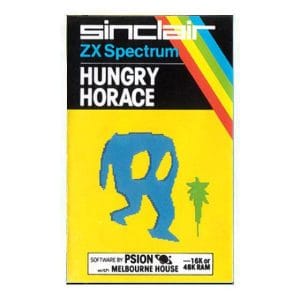 The game is notable for its charming pixel art style. This evokes a sense of nostalgia for players familiar with early 16-bit graphics. Each level is richly designed with colourful backgrounds and animated sprites that bring the world of Horris to life. The soundtrack, featuring catchy tunes and sound effects, enhances the overall experience, immersing players in Horris’s whimsical universe.
The title sparked discussions around accessibility in gaming. As its simple controls and forgiving difficulty curve made it appealing to a broader audience, including younger players and those new to gaming. This focus on inclusivity has influenced many modern games, emphasizing the importance of welcoming a diverse player base.
According to the original instructions
You are Hungry Horace, intent on devouring everything in your path. Each flower in the park that Horace eats scores 10 points. But beware of the park guards who are out to catch Horace and eject him from the park. If Horace is caught three times he will not be allowed back in and the game will end.
There are several alarm bells in the park. If Horace can ring one of the alarms, the guards will panic and Horace can turn the tables, catching them and throwing them out of the park.
Look out for when one of the guards drops his lunch of cherries or strawberries. You will score 100 points if Horace eats the guard’s lunch.
The park is divided into several sections and in each part there is an exit leading to the next section. Horace does not need to eat all the flowers or reach the alarm before entering the next section. Each section of the park is harder than the one before.
The Creation of Hungry Horace
William Tang, known for his remarkable ability to push the boundaries of coding on the ZX Spectrum, brought a unique vision to the realm of game development. His understanding of the hardware’s limitations allowed him to devise ingenious solutions, optimizing performance while delivering engaging gameplay experiences.
Horace, on the other hand, was a character born from the amalgamation of Tang’s coding prowess and a design philosophy that emphasized simplicity and accessibility. The character design choices for Horace reflected an intention to appeal to a broad audience. Capturing the charm of the era’s graphics while ensuring he was instantly recognizable and endearing. His adventures were built around relatable themes, allowing players to connect with him on a personal level.
Together, Tang’s coding expertise and Horace’s design choices resulted in a series of games that not only entertained but also showcased the potential of the ZX Spectrum. Each game was a testament to the creativity that could flourish within the constraints of early computing technology. The mechanics and level designs were crafted to challenge players while remaining intuitive enough for newcomers.
As Tang continued to innovate, he explored new gameplay mechanics, from platforming to puzzle-solving, all while maintaining Horace’s whimsical charm. This combination of coding genius and thoughtful design choices led to a legacy that would inspire future generations of game developers, reminding them that even within limitations, creativity knows no bounds.
Gameplay Mechanics and Features
Hungry Horace is a maze-based game that gained popularity in the early 1980s. The influence of Pac-Man is evident as players navigate through a labyrinth, consuming items while attempting to evade adversaries. However, with the right tools, you can turn the tables on these foes. The game’s unusual protagonist hints at the presence of quirky features that shape this gameplay experience.
Initially, the labyrinths that Horace explores seem to consist of a series of parks, and he is excited to munch on the flowers that line his route. However, someone holds these parks and their blossoms in high regard. As they are monitored by guards who will seize Horace if they manage to make contact and take his life.
The guards are depicted as pink floating heads donning hats. And the player can disrupt them once per maze by ringing the red bell, which causes the guards’ hair to stand on end. If Horace reaches them afterward, he can send them packing. Additionally, the guards may drop fruit that yields a substantial amount of points. And capturing a guard while the alarm is sounding also rewards points.
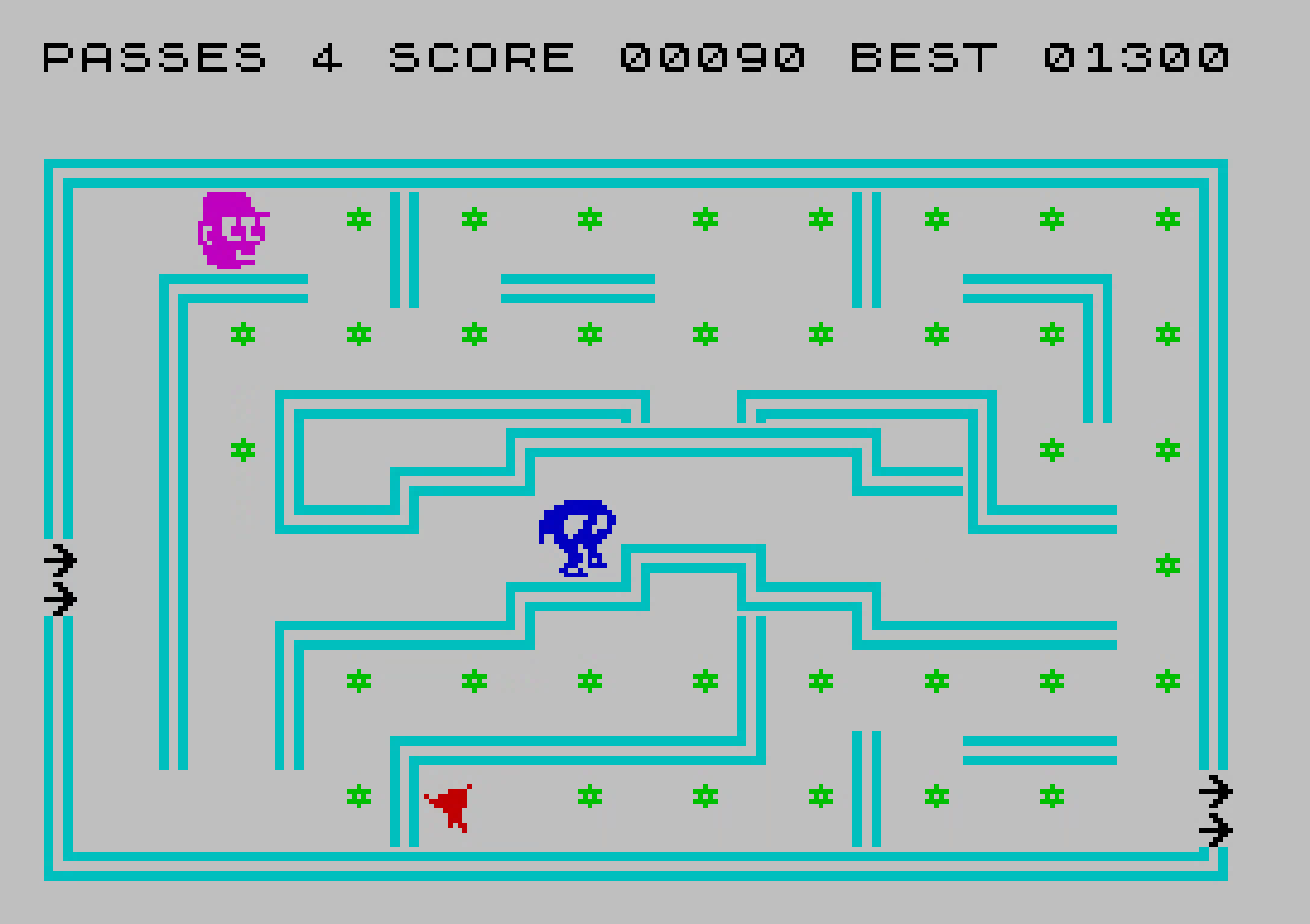
Level 1 the first maze
Get ready to dive into Hungry Horace’s first maze, which may seem quite ordinary at first glance. This single-screen area is filled with walls that challenge you to find your way. At the heart of the maze, you’ll discover a striking pair of jagged parallel lines that symbolize a bridge soaring above the path. Feel free to explore beneath the bridge if that sparks your curiosity! Just keep in mind that there’s a clear dead end waiting to test your navigation skills. Embrace the adventure and conquer this maze!
Crucially, that dead end directs you to the first warning signal you’ll face while playing. This initial level is usually quite straightforward to navigate, even if you come across it later, as the levels follow a specific sequence.
Although you might not realize it in the first level due to its user-friendly layout, Hungry Horace doesn’t require you to take any action while in the maze. You can leave the park and proceed to the next level regardless of how many flowers you’ve collected, and there’s no timer pushing you to hurry.
However, aside from possibly waiting for guards to drop more fruits, there isn’t much incentive to dawdle. Nonetheless, there is a strategic aspect to consider: you could choose to exit a level early if you feel you won’t be able to safely collect any remaining flowers. This concept might have been more effective in a game focused on high scores.
Level 2 looks to be straightforward
Level 2 is, in fact, the most structurally ordinary yet stable, with the corridors and corners laid out in such a manner that you must tread cautiously to avoid encountering the guards. However, it’s relatively straightforward to identify a secure route to bypass them. Unfortunately, Level 3 marks the decline of Hungry Horace’s initial straightforwardness and enjoyable maze gameplay, which is soon overshadowed by a poorly thought-out design.
Level 3 watch out for the guards
Upon reaching level 3, you will find both an elevated path and a lower one. The key point to note is that the upper route is completely straight for a considerable distance, making it impractical for Horace to dash to its sole intersection. Even at that junction, you can either access the exit or trigger the alarm. Guards are consistently present on the upper path, making it impossible to bypass them unless you draw their focus and lure them down to the lower level.
The lower route features a loop at the end that allows you to trap a guard. However, many levels contain multiple guards. And additional ones may appear as reinforcements over time. It’s quite possible that you’ll need to go up and draw the attention of a second guard, or even more.
If the timing is off, or if a guard chooses not to follow you correctly. You could find yourself in a precarious position between two adversaries. On the positive side, when you come into contact with a guard, they vanish, so you won’t have to face them again upon respawning.
Level 4 is very challenging
The straightforward layout of Level 3 quickly diminishes the game’s potential, as it appears almost purposefully crafted to eliminate players. However, there are moments when you can navigate through it, and after exchanging a life with a guard, you progress to the final stage layout, Level 4. Initially, this level doesn’t seem too challenging; the player begins in a narrow hallway and exits through a similar passage. Yet, despite appearing to be dead ends, these corridors actually transport you to either the entrance or exit of the expansive central chamber.
Filled with numerous flowers and four small squares, this central chamber is quite spacious. And navigating around the guards presents a distinct challenge. However, there’s a problem with the necessity of moving a predetermined distance. Sometimes, the guards may refuse to leave the entrance hall, but even worse, they can position themselves at the teleporter, trapping you. With one guard removed from the equation, completing this stage will be easier than level 3. However, Hungry Horace still feels like it has been designed without much consideration, as there are instances where avoiding failure seems impossible.
The verdict of the game
While Horace certainly has his charm as a quirky character, Hungry Horace may not capture the hearts of many players. In Levels 3 and 4, players are put in a tough spot, as the patrolling guards can make it nearly impossible to escape if they decide to target you. This can lead to a sense of frustration when lives are lost unfairly. While the initial levels feel a bit too simple once you grasp their mechanics.
Unfortunately, Hungry Horace turns into a bit of a gamble, relying on the guards’ whims for your continued play. This can make the pursuit of high scores feel a bit detached and out of your hands. Let’s keep pushing forward and find the fun in the challenge!
Cultural Impact
While “Hungry Horris” did not achieve the widespread fame of other contemporaneous titles. Its success demonstrated that smaller developers could create engaging and commercially viable games outside the traditional publishing model. The game inspired a wave of indie developers to explore creative narratives and unique gameplay mechanics, ultimately contributing to the flourishing indie game scene that we see today.
The title also sparked discussions around accessibility in gaming, as its simple controls and forgiving difficulty curve made it appealing to a broader audience. This focus on inclusivity has influenced many modern games, emphasizing the importance of welcoming a diverse player base.
The Horris Legacy
In retrospectives of gaming history, “Hungry Horris” is often cited as a pioneering title that helped shape the landscape of indie games. Its legacy is reflected in various sequels and spin-offs that have emerged over the years.
Horris became the unofficial mascot of the ZX Spectrum through a delightful blend of community spirit, quirky creativity, and a bit of serendipity.
Over the years, Horris became synonymous with the ZX Spectrum itself. He appeared in forums, newsletters, and even on the covers of magazines dedicated to retro gaming. The unofficial mascot brought together generations of gamers. Reminding them of the joy and excitement of programming, gaming, and exploring the digital world on their beloved Spectrum.
In conclusion, “Hungry Horris” may not have been a blockbuster success, but its significance in gaming history is undeniable. By paving the way for indie development and promoting inclusivity in gameplay. It has left an indelible mark on the industry, continuing to inspire new generations of gamers and developers alike.
Hungry Horace
Buy Online Today.
The orginial 1982 cassette tape game.
BUY NOW >